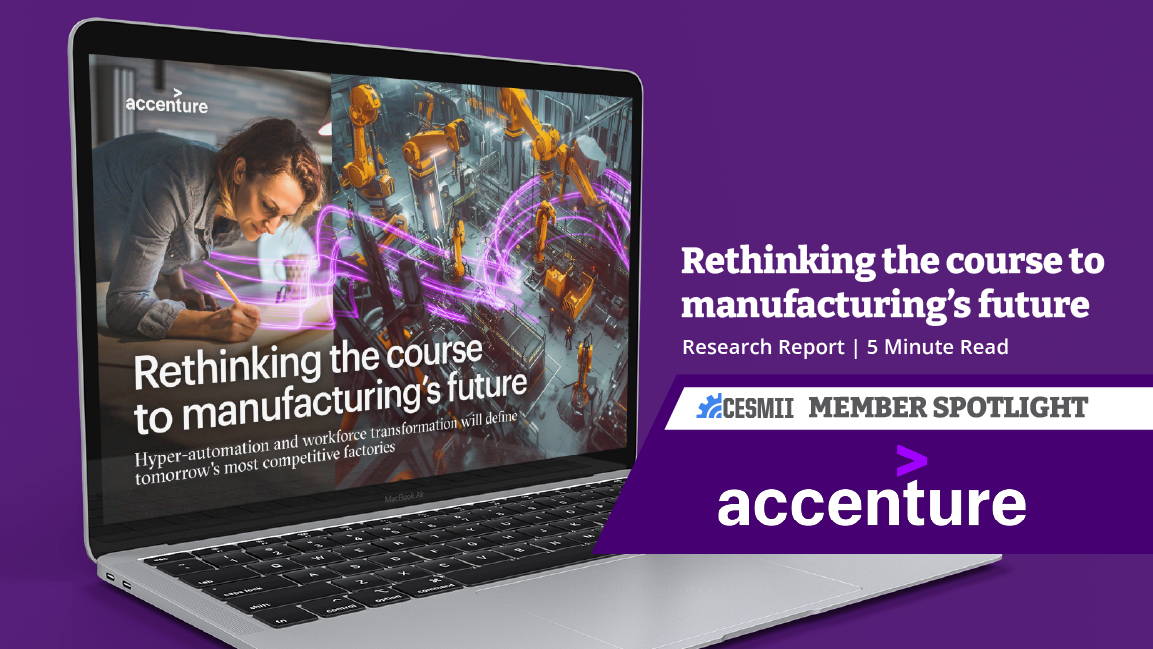
5 MINUTE READ
In brief:
- By 2040, hyper-automated factories will provide more agility and flexibility while enabling a step change in productivity.
- According to our survey of 552 factory managers, most are still focusing on digitalization measures that should, arguably, already be in place.
- Taking steps now in workforce transformation, automation, AI optimization, and digitalization is key to tomorrow's most competitive factories.
What will the most competitive factories look like in 2040? The answer won’t just be determined by cost efficiency and quality levels; in fact, high marks on both are table stakes. The real differentiators will be flexibility, sustainability and intelligence—qualities that will rest on a factory’s ability to move beyond traditional automation and embrace the seamless convergence of advanced robotics, data, AI and digital tools.
We call that state hyper-automation. It’s a viable goal—in fact, it’s the inevitable competitive path, according to the 552 factory managers who recently participated in Accenture’s in-depth, global survey (see box, “Our Methodology,” for detail). However, getting there won’t be easy, as most factories face a battery of challenges, including workforce shortages, complex brownfield environments and slow adoption of AI-driven processes.
To outline the best path forward, we drew on our survey findings, coupled with our own client experience. Since the usual planning period for factories in our surveyed industries is about five to seven years, anything beyond that is generally thought of as a “vision.” Taking the vision of 2040 articulated by our survey respondents as our starting point, we set out to close the gap between what’s in their sights in the next five to seven years, and what’s beyond in terms of planning and actions.
This report follows that structure. The first major section articulates the 2040 vision—what the factory of the future could look like. Subsequently, it outlines guardrails for the steps that factory managers need to take across four areas: Workforce, Automation, AI optimization and Digitalization. In each, the key is balancing near-term efforts with the foundational needs for the factory of the future.